A spotlight on women in animation
As part of a UNESCO City of Film initiative, a selection of female animators have had their work shown at the Wellington Animation Film Festival 2026 and around the world.
Rebecca McMillan
Lisa Harrow and Chelsie Preston Crayford on the set of the feature film Caterpillar.
For writer/director Chelsie Preston Crayford, her debut feature film ‘Caterpillar’ presented an opportunity to tell her own story. “I’ve worked as an actor since I was a kid,” says Chelsie. “What you end up doing is servicing other people’s visions and saying what other people want to say. For me, turning to writing and filmmaking was about me saying what I wanted to say.”
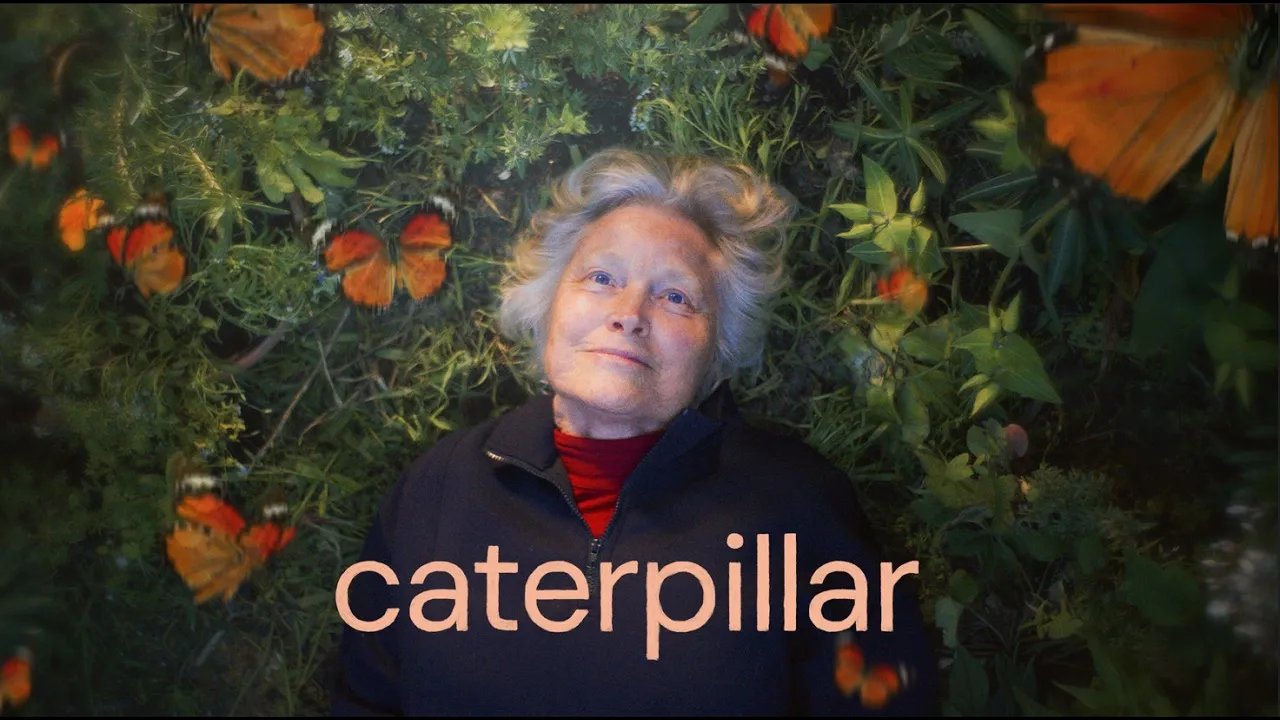
Set in Wellington in 2003, ‘Caterpillar’ follows three generations of women living under one leaky roof, all on the brink of change. “It is a story about love, transformation, and letting go,” says Chelsie. “The family is going through a massive transformation that they don’t quite know the magnitude of yet. It’s about them all muddying through it in a slightly chaotic fashion.”
Rebecca McMillan
A comedy-drama, the film elicits both laughter and tears. Tackling a narrative with multiple protagonists is a challenging undertaking. To capture the complex character dynamics authentically, Chelsie drew on her own experiences. “My grandmother lived with my mum and me, from when I was seven or eight till I was sixteen. In that time, she was really my other mother... It’s a fable set in the world of our lives, drawing from us as characters, but it has evolved into its own thing over the six years that I wrote it.”
Filming took place all over Wellington, with numerous scenes taking place in a beautiful Newtown villa and on the streets of Kilbirnie. A crew of 120 worked on the production across the shoot and post-production. Like so many passion projects, life and work blurred together during production. “The film is about being a mother and being a daughter and also being an artist, and how to retain yourself in amongst fulfilling all of those roles. So it was very present material... I grew a baby while we were in post-production. They were both delivered kind of at the same time. Ridiculous!”
Rebecca McMillan
One of the film’s stars, the monarch butterfly, required filming to take place over spring, when the butterflies emerge from their chrysalises. “The oldest character is obsessed with them. She’s a monarch person... We filmed a lot of material that includes caterpillars and butterflies, which is really hard to capture.” Because all the props were stored in the same place, crew members would discover chrysalises on props and pieces of furniture. It became a through motif that went beyond the camera.
A proud Wellingtonian, Chelsie says filming in her home city was a joy. “People were incredibly generous and excited by the production... Sometimes, I couldn’t believe my luck and that I’d pulled it off. I was getting to revisit this time that was very formative for me. I love Wellington so much.”
As part of a UNESCO City of Film initiative, a selection of female animators have had their work shown at the Wellington Animation Film Festival 2026 and around the world.
Well-known naturalist Ruud Kleinpaste gets to know its waters in a new documentary.
Tom Sainsbury’s popular podcast comes to life in a new TV series filmed in Lower Hutt near Wellington.
‘Diverse Voices’ is a project developed by Wellington UNESCO City of Film to uncover some of the region’s diverse storytelling talent.
An Indigenous Animators Exchange between Wellington and Galway, both UNESCO Creative Cities of Film, is celebrating Te Reo Māori and Irish Language/Gaelic.
A TV drama series brings Celtic myth to Wellington’s south coast. The production team reflect on filming through winter and working with animatronic seals.
New Zealand’s latest drama ‘After The Party’ is the very first series leading Australian producer Helen Bowden has made in Wellington, New Zealand.
Supernatural comedy Little Apocalypse is New Zealand’s first scripted children’s series by, for and about rainbow young people.
Actress Ana Scotney is a proud Wellingtonian, and prouder still since the release of feature film Millie Lies Low, which was filmed in Wellington, New Zealand.
The Screen Accelerator Project helps creators turn ideas into commercial productions. With Emmy-winner Jon Kroll’s guidance, locals gain industry insights to put Aotearoa’s stories on the world stage.